Speaking
Source (中文): 口语篇
Speaking is where everything comes together. And yes—pronunciation matters, but you don’t need to obsess. You just need a solid base and a lot of reps.
IPA / Phonics
If you want to speak better, start with pronunciation. And to learn pronunciation, you’ll eventually meet IPA (phonetic symbols) or phonics.
There’s no shortcut here. The good news is: the content is limited. Learn the sounds, practice out loud, and come back to them repeatedly.
Recommended playlist:
Vowels (quick reference)
- cop /ɑ/ — like “ah”
- the /ə/ — “uh” (unstressed)
- cup /ʌ/ — like “uh” (stressed)
- boot /u/ — “oo”
- book /ʊ/ — shorter “oo”
- beat /i/ — “ee”
- bit /ɪ/ — “ih”
- make /eɪ/ — “ay”
- head /e/ — “eh”
- had /æ/ — “a” as in “cat”
- law /ɔ/ — “aw”
- now /aʊ/ — “ow”
- bite /aɪ/ — “eye”
- boy /ɔɪ/ — “oy”
- go /oʊ/ — “oh”
Consonants (quick reference)
- web /w/
- yes /j/
- father /f/
- very /v/ (like /f/ but with voice)
- red /r/ (before a vowel)
- car /r/ (after a vowel)
- light /l/ (before a vowel)
- well /l/ (after a vowel)
- night /n/ (before a vowel)
- pen /n/ (after a vowel)
- mom /m/
- sing /ŋ/
- roads /dz/
- let’s /ts/
- boss /s/
- rose /z/ (voiced /s/)
- thanks /θ/
- them /ð/
- just /dʒ/
- check /tʃ/
- she /ʃ/
- Asia /ʒ/
- try /tr/
- dry /dr/
- pet /p/
- bed /b/
- too /t/
- do /d/
- kiss /k/
- go /g/
- how /h/
Channel recommendation:
- EnglishAnyone (great for speaking practice)
Speak Out Loud
Speaking quietly and speaking out loud are very different.
Using New Concept English Book 3/4 as an example:
- listen carefully first
- read out loud
- at the beginning, don’t worry about linking or pausing—just focus on clear, accurate sounds
- once you can read smoothly, start mimicking the speaker’s rhythm and intonation
Real Conversations: The “Yeah… yeah… yeah” Phase
When you first try to communicate in pure English, it’s common to feel this awkward gap:
In your head you want to say:
“I can’t believe we think the same way.”
But what comes out is just:
“Yeah.”
And then:
“Yeah… yeah… yeah…”
This is normal.
Many people speak like this at first:
1) think in Chinese
2) translate into English in their head
3) search for the right word
4) get stuck and freeze
After enough listening and speaking practice, your brain starts building “reflex phrases”. In certain situations you’ll respond instantly without translating.
(The simplest proof is that people can blurt out things like “f*k” and “sht” without any effort.)
Sing English Songs
If you’re already in love with melodies, why not sing?
Lately I’ve been into Troye Sivan. Here’s a simple way to practice:
- organize the lyrics
- write down unknown words and learn them first
- sing along (yes, I actually bought a microphone)
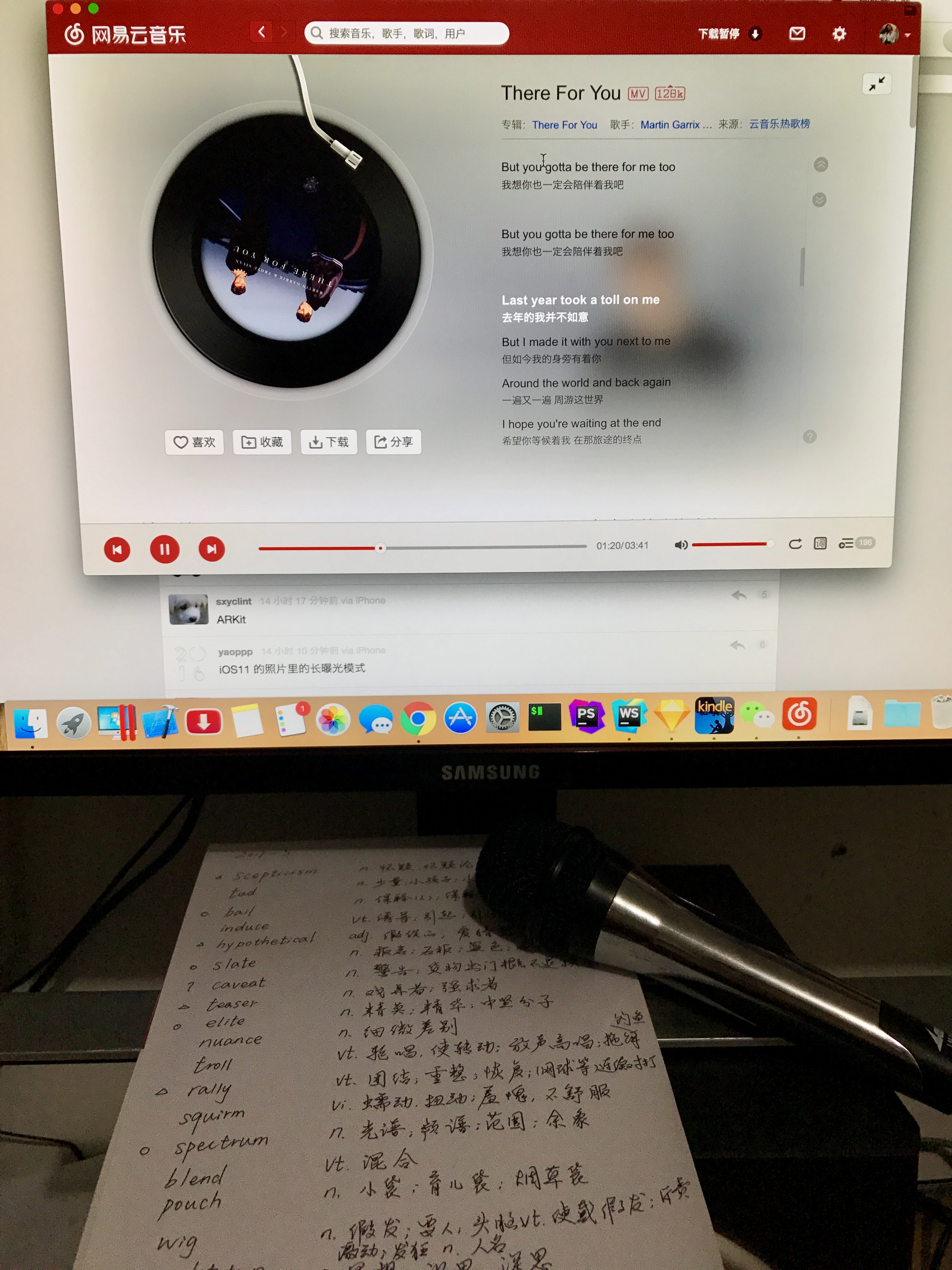
Clear motivation + strong goal + real interest = surprisingly good results.
Prepare Common Questions for Yourself
To build “English intuition”, prepare a set of common topics and practice them repeatedly until you can speak smoothly and reorder sentences freely:
- introduce yourself
- introduce your hometown
- how life has been recently
- a few things that make you happiest
- a small but unforgettable memory
- your opinion on a product (e.g., iPad Pro)
Recommended YouTube Channels
- EnglishAnyone
- Speak English With Vanessa
- Doing English with Julian Northbrook
- A.J. Hoge
- AccurateEnglish
Less is more. Pick a few and practice a lot. If you have great channels to recommend, open an issue.